And the flamingos march on
Why are so many people protesting in Albania?
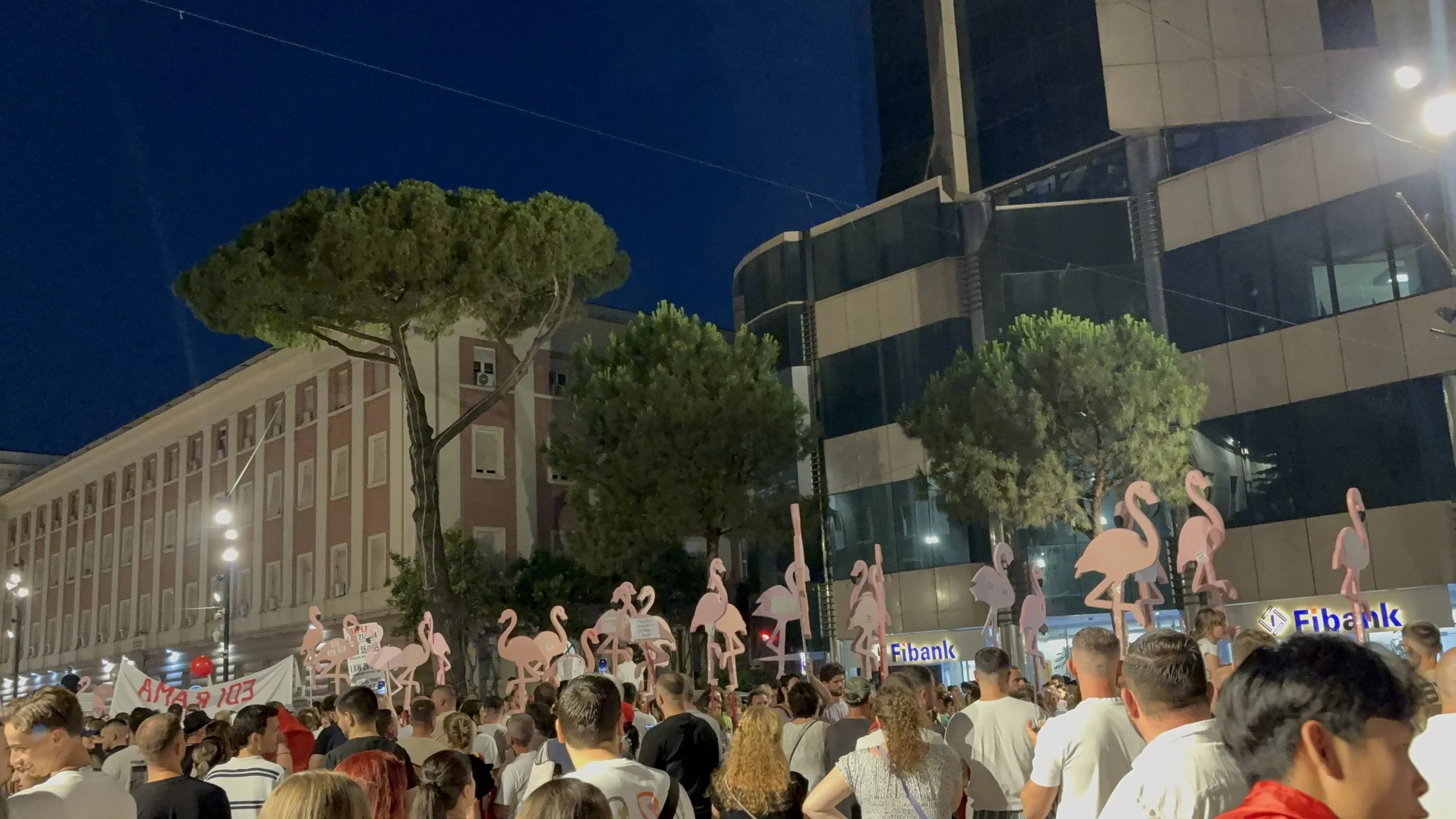
Every single night for a month now folks have gathered. Every night the energy has infused the streets of Tirana. It surges daily just before 7:00pm as people make their way to the main boulevard with their flags, their signs, their whistles. The people are all on the move and the flamingos are marching on.
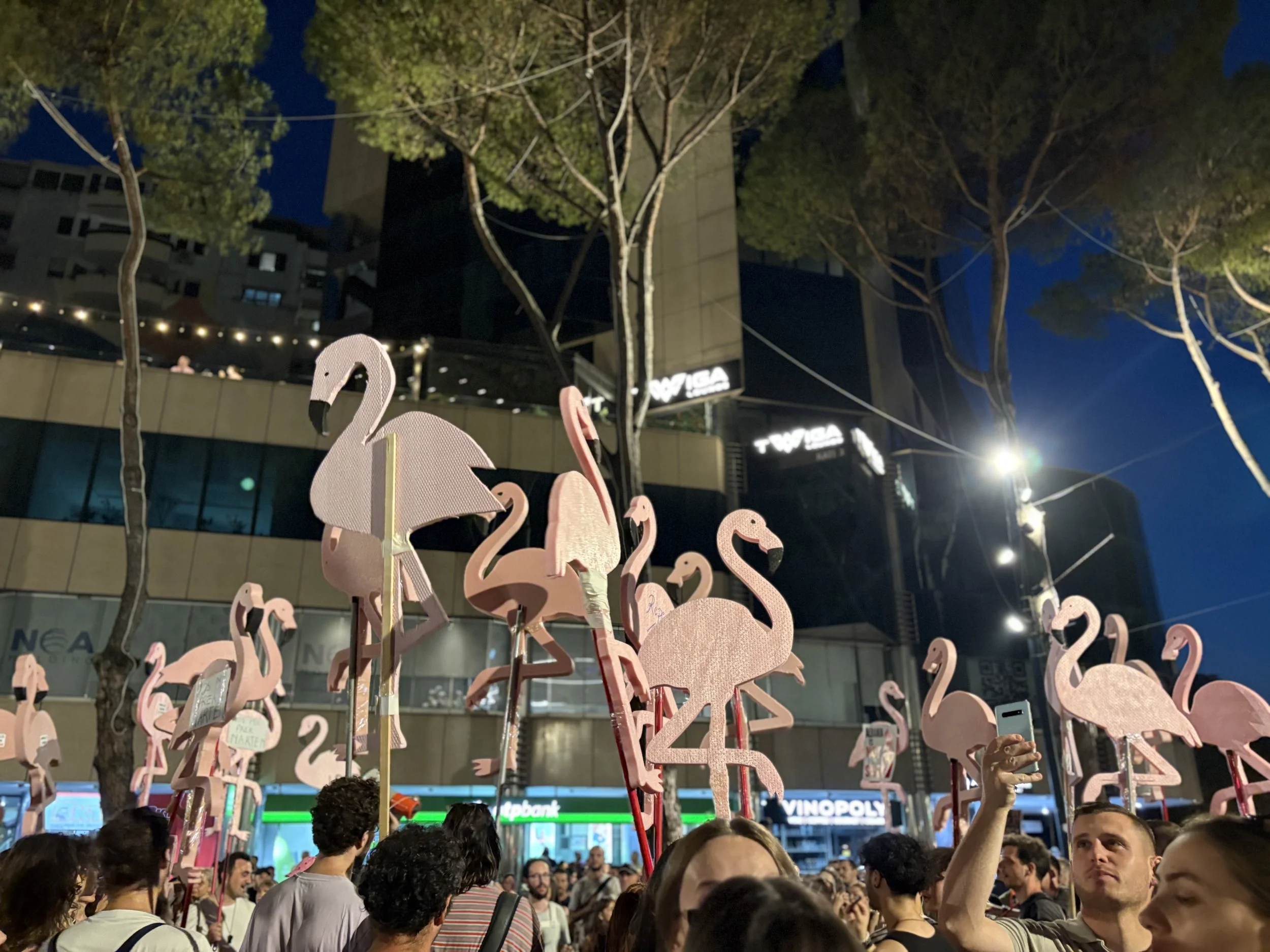
Why? Many recent news stories about the ongoing Albanian protests have largely focused on the resistance to the recently announced luxury development project by Ivanka Trump and Jared Kushner. The protests have been described as a large display of opposition to the Trump family, and this opposition is an important fact to understand. How, exactly, is the Trump family involved? Well, to let Ivanka Trump Kushner, recently nicknamed “Ivanka Columbus” tell it, just over a year ago she and her husband Jared “discovered” the area of Sazan off Albania’s coast (near the village of Zvërnec), and marveled at the fact that it was undeveloped. They decided then that they wanted to “develop it” as a site for luxury tourism. Despite the area’s designation as an environmentally protected wildlife zone home to such birds as flamingos and other rare wildlife, the Kushners are planning a multi-billion dollar development. And Albanian Prime Minister Edi Rama has insisted that despite the environmental protections, the State is allowing the project to move forward as planned. The opposition to this project and the concern for environmental protection are indeed a major part of the Flamingo Revolution protests as they have been dubbed, but this movement is bigger than the Kushners or the Trumps; this movement is about the quest for a different vision for Albania’s future.
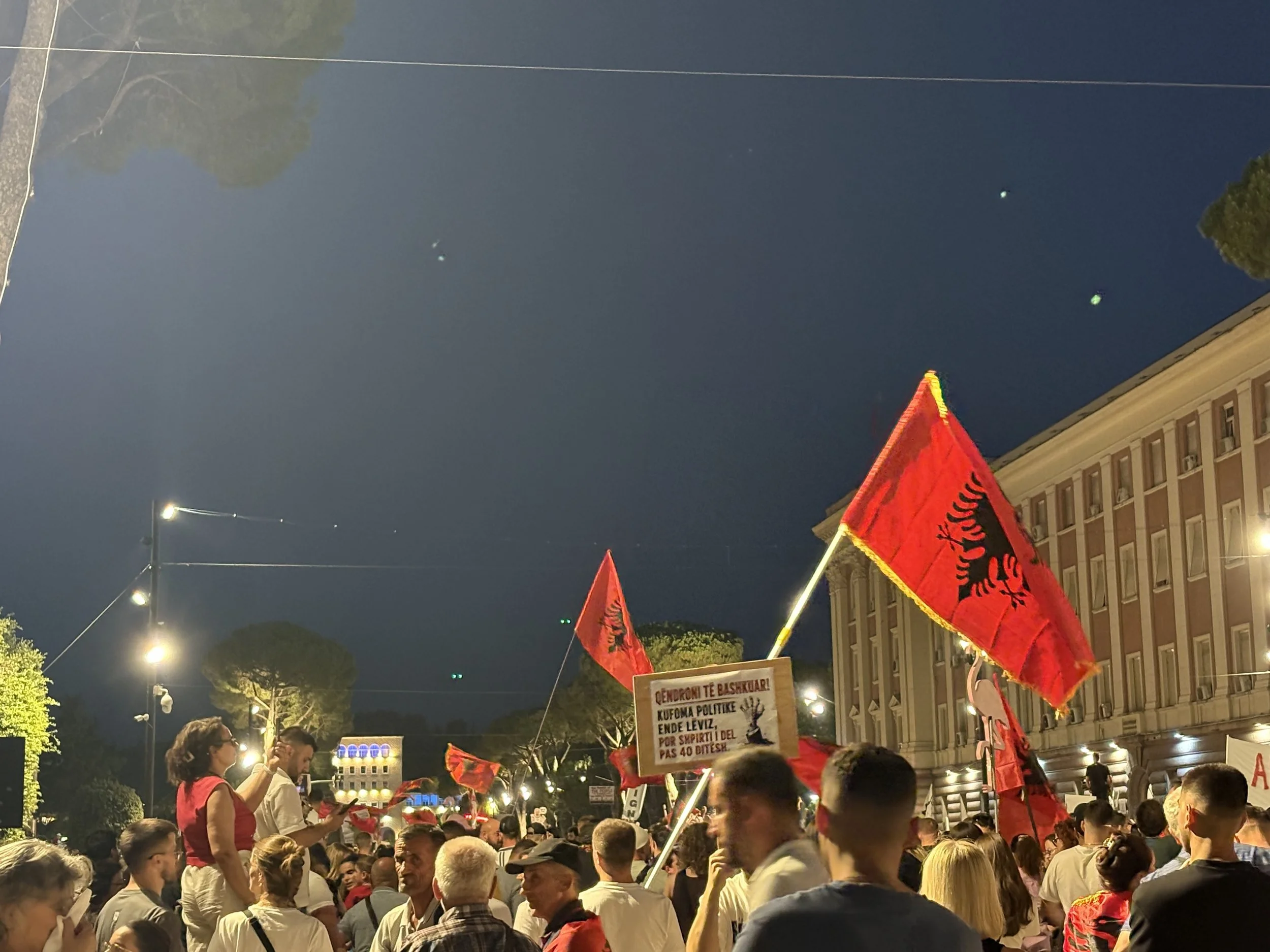
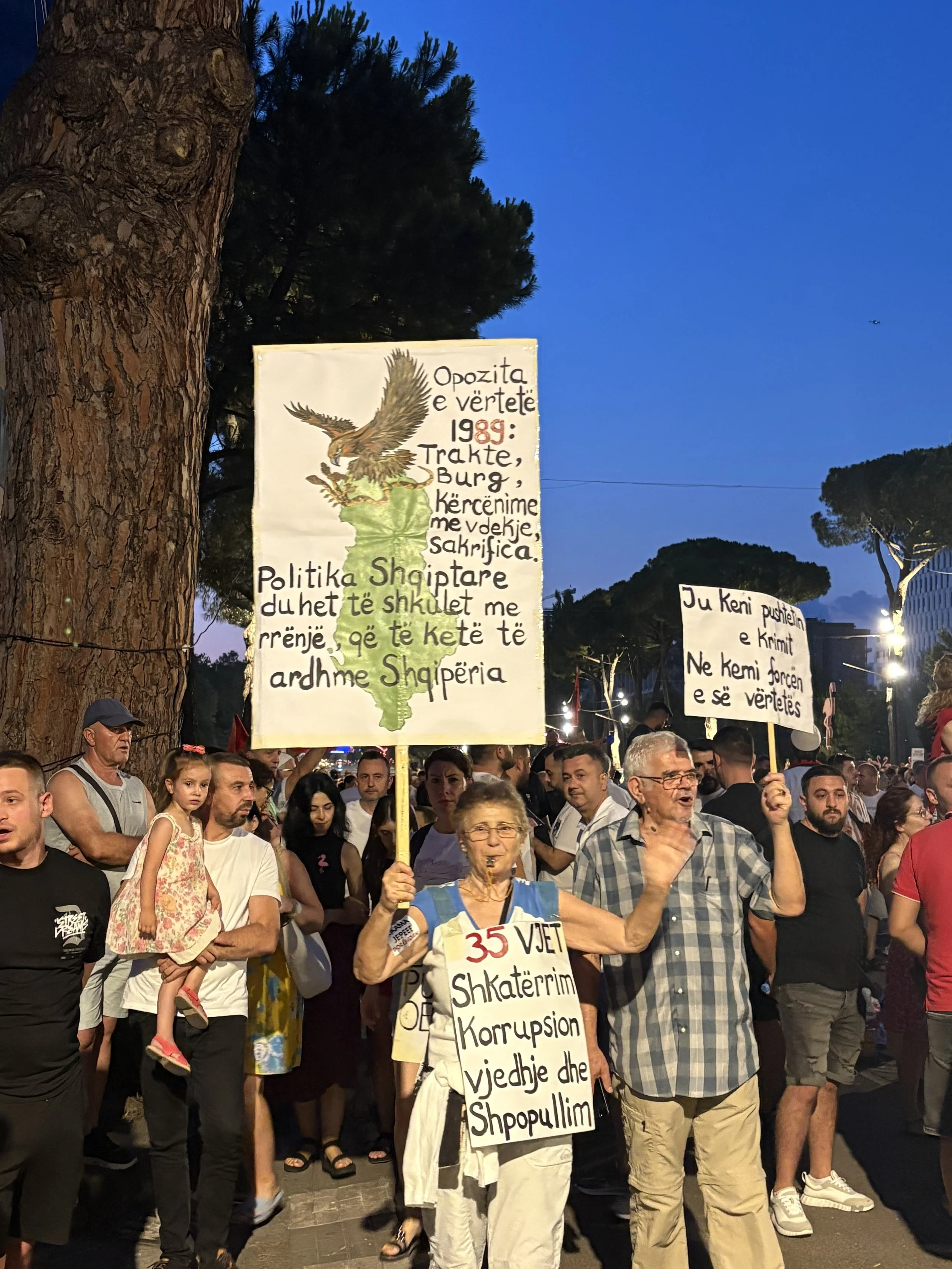
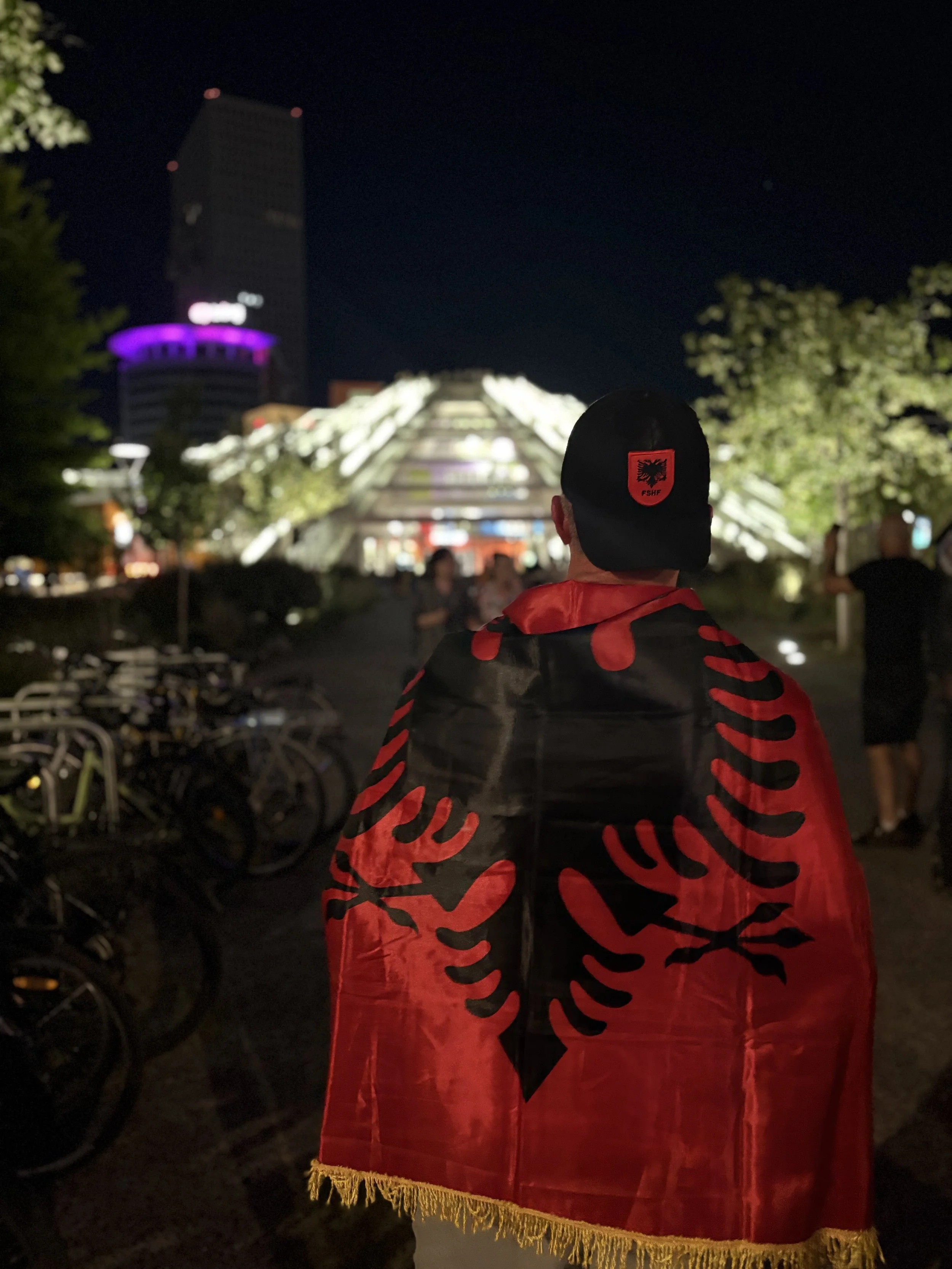
The Flamingo Revolution is the largest protest movement in Albania since the fall of the communist regime in the early 1990s. Similar to the resistance movements of the 90s, today’s protests are largely led and fueled by the youth but it has been amazing to witness the generational solidarity on display. Older people march with signs decrying corruption. Young and middle-aged adults loudly proclaim that “Albania is not for sale!” Younger kids spread out in a designated children’s zone where they can draw with paper, markers, and chalk, and share popcorn. Other kids sit on the shoulders and backs of their parents proudly waving red flags and balloons with the signature double-headed eagle. Many people gather on the stairs of the infamous pyramid, originally built by former communist dictator Enver Hoxha’s daughter to honor her father, a structure now serving as multi-use cultural center.
From the top of the pyramid down to the streets beneath the prime minister’s office you can hear the chants and shouts ring aloud. The interests and the desires of the wealthy few have dominated and controlled Albanian politics for far too long. People want something different; they want an alternative vision and are demanding a different future. And for many that different future includes a different leader. In response to the protests Prime Minister Rama recently stated that “Albania needs development” and has maintained that such luxury resorts are necessary for Albania’s future, however, the people are asking why, and at what cost? And who gets to decide? Why must there be so much focus on development and projects that line the pockets of the rich oligarchs?
I recently published a book about Albania in which I argued that Albania can offer significant insight into the subjects of anthropology, about race and social relationships, and about broader questions of what it means to be European. I think the current protests are further demonstrating that there is indeed much to be learned from Albania.
Many of the narratives that are circulating through traditional and social media outlets have focused on opposition to the Trump family, and some of have portrayed the protests as violent clashes but this movement has been peaceful. Folks want to be in the streets, and many of those who cannot be there express a desire to join. Night after night people have come from across the country to gather in Tirana. It is a movement that is being carried forth by swelling frustration that has lingered at the surface for quite some time, a movement in which people are decrying the opacity that has dominated Albanian politics—they want transparency, they want accountability, and they want a political system that really protects the people and not private interests. Albania, the people repeat, is not for sale. And as they chant, the flamingos continue to march on.